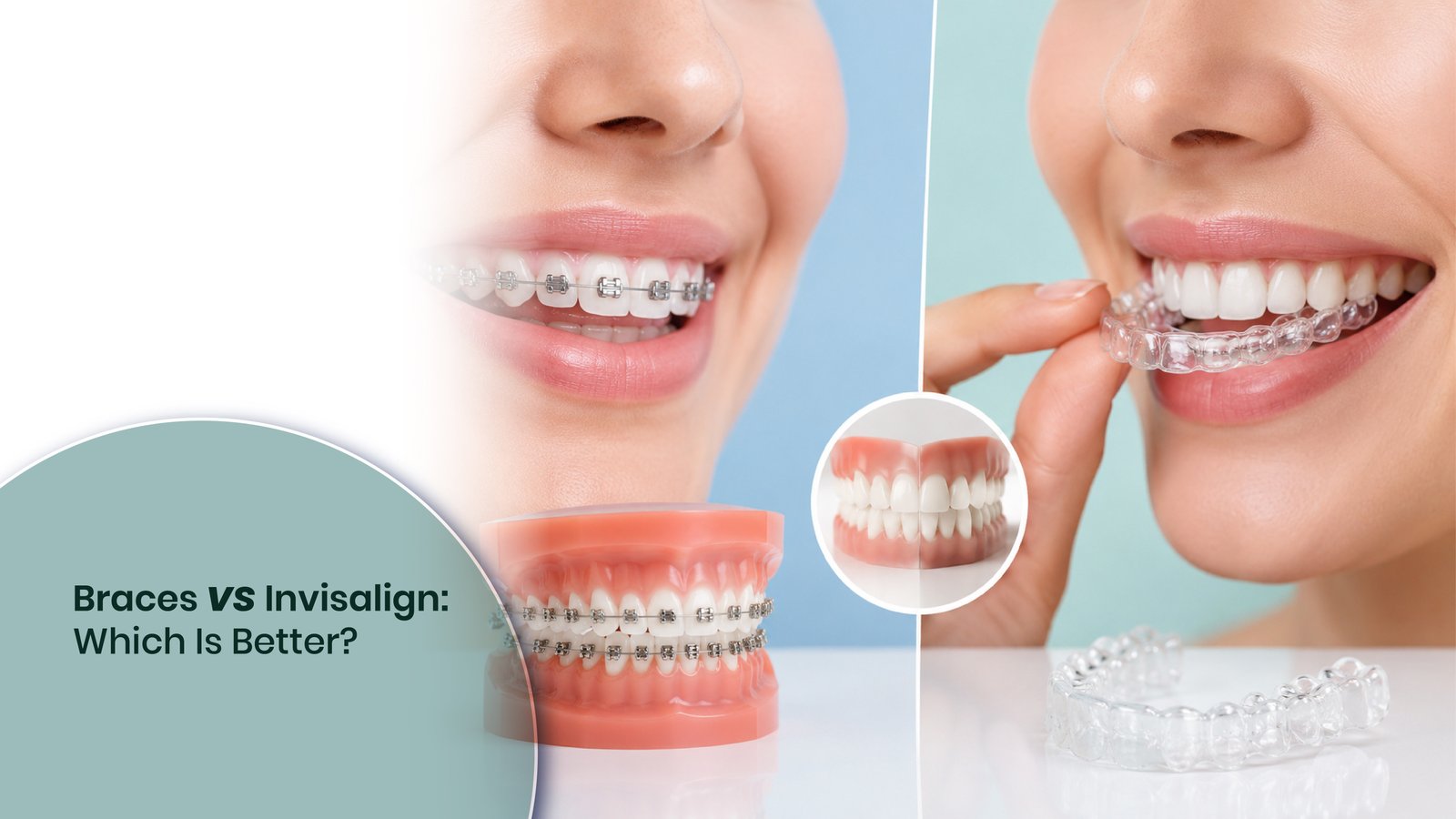
Braces vs Invisalign: Which Is Better?
Straight teeth aren't just about looking good in photos. They make chewing easier, help with speech, and honestly make brushing and flossing a lot less of a hassle. But once you decide to fix your smile, a bigger question shows up: braces or Invisalign?
If you're looking into Braces Treatment in Ahmedabad , it helps to know what actually separates the two. Before you commit, your lifestyle, your budget, and how bad your alignment issue is all play a part in the decision.
Here's a breakdown of what each option does well, where it falls short, and who it's really meant for.
Traditional Braces: The Basics
Braces work with brackets glued to your teeth and wires running through them, tightened at intervals to slowly push teeth into place. You'll visit your orthodontist every few weeks for adjustments.
They come in metal or ceramic these days, so there's at least some room to pick based on comfort or how visible you're okay with them being.
For anything complicated, braces are still the gold standard.
They handle:
- - Severe crowding
- - Big gaps between teeth
- - Bite issues
- - Teeth that have rotated out of position
- - Jaw alignment problems
A lot of patients coming in for Braces Treatment in Ahmedabad end up going the traditional route simply because it's more predictable for tougher cases.
Invisalign: The Basics
Invisalign uses a set of clear, custom-moulded aligners. You wear each one for roughly two weeks before switching to the next in the series, and your teeth shift gradually with each swap.
The obvious point is that nobody really notices you're wearing them. That's a big deal for people who don't want a mouth full of metal at work or in social settings.
Since you can pop them out to eat or brush, a lot of adults and working professionals lean toward Invisalign treatment in Ahmedabad.
So, Which One Looks Better?
If appearance is your main worry, Invisalign wins this one pretty easily.
The aligners are see-through and don't draw attention, which matters a lot to teens and adults who want to feel confident while their teeth are still straightening out.
Braces are more noticeable, though ceramic versions tone that down since they blend closer to your natural tooth shade.
So if looks matter most to you, Invisalign is probably the safer bet.
Which Works Faster?
Honestly, there's no single answer here.
Minor alignment problems often get sorted out faster with Invisalign. However, in more complicated cases, braces often offer orthodontists superior control over the movement of each tooth, which typically means improved results for tougher situations.
- - How severe the misalignment is
- - The patient's age
- - Habits like teeth grinding or nail biting
- - Whether you actually stick to instructions
There's really no way around it — you need a proper consultation to get a realistic timeline.
What About Comfort?
People ask this one a lot: do braces hurt more than Invisalign?
Braces can leave you sore for a day or two after each adjustment, and the brackets sometimes rub against your cheeks in the first couple of weeks.
Invisalign aligners are smoother, so most people find them more comfortable overall. That said, switching to a new set in the series still brings some pressure and mild discomfort, it's not entirely pain-free either.
The good part is that both get easier once your mouth adjusts to them.
Eating and Cleaning: No Contest Here
This is where Invisalign really pulls ahead.
Since you take the aligners out before meals, you can eat whatever you want without worrying about damaging anything.
Braces are trickier. Sticky sweets, hard snacks, and crunchy foods can bend wires or pop off brackets if you're not careful.
Cleaning is easier too with Invisalign, you just brush and floss like normal. With braces, you'll need extra time to dig out food stuck around the brackets and wires.
Quick Comparison
| Factor | Traditional Braces | Invisalign |
|---|---|---|
| Visibility | Metal or ceramic brackets, visible | Nearly invisible |
| Removability | Fixed, can't take off | Removable |
| Best suited for | Mild to severe cases | Mild to moderate cases |
| Food restrictions | Quite a few | Barely any |
| Oral hygiene | Needs extra effort | Much simpler |
| Discipline required | Low — it's fixed anyway | High, you have to stay consistent |
Who Should Go With Braces?
Braces probably make more sense for you if:
- - Your crowding or bite problem is on the severe side
- - You need very controlled, precise tooth movemen
- - You'd rather have something fixed than worry about losing or forgetting removable trays
- - You want the most tried-and-tested option available
Orthodontists still tend to recommend Braces Treatment in Ahmedabad for anyone dealing with complicated corrections, mainly because the outcomes are so consistent.
Who Should Go With Invisalign?
Invisalign might be the better fit if:
- - You want something discreet
- - Your alignment issue is mild to moderate
- - You can commit to wearing the trays 20–22 hours a day
- - Easier eating and cleaning matter to you
That commitment part is non-negotiable, though. Take the aligners out too often, and you'll end up delaying your own results.
Bottom Line
Braces and Invisalign work well for both, but the best choice depends on your specific needs and what you value most.
But if your case is one of the more serious bite and alignment issues, then braces are still the most reliable way forward. If you prioritise appearance, functionality and ease of care more than affording braces, Invisalign is a good option to explore.
Ultimately, the best option comes down to your dental circumstances, daily habits and what it is you really want from treatment. Consulting experts at Virtues Dentaire can let you know what path suits your smile (and oral health in the longer term). You can also call 9601612384 and book your appointment.