
Good oral hygiene, less frequent sugar, plenty of water, and cleaning between your teeth daily. Fluoride matters a lot here too.
How to Prevent Cavities: Tips for Healthy Teeth
Cavities don't usually announce themselves. They start quietly, and by the time tooth decay's progressed, you're looking at sensitivity, pain, trouble eating, even losing a tooth. Here's the good news, though, most cavities are preventable with consistent care and a handful of everyday changes. Whether you're after a Dentist in Ahmedabad or just want to take better care of your teeth at home, understanding what actually causes cavities is where prevention starts.
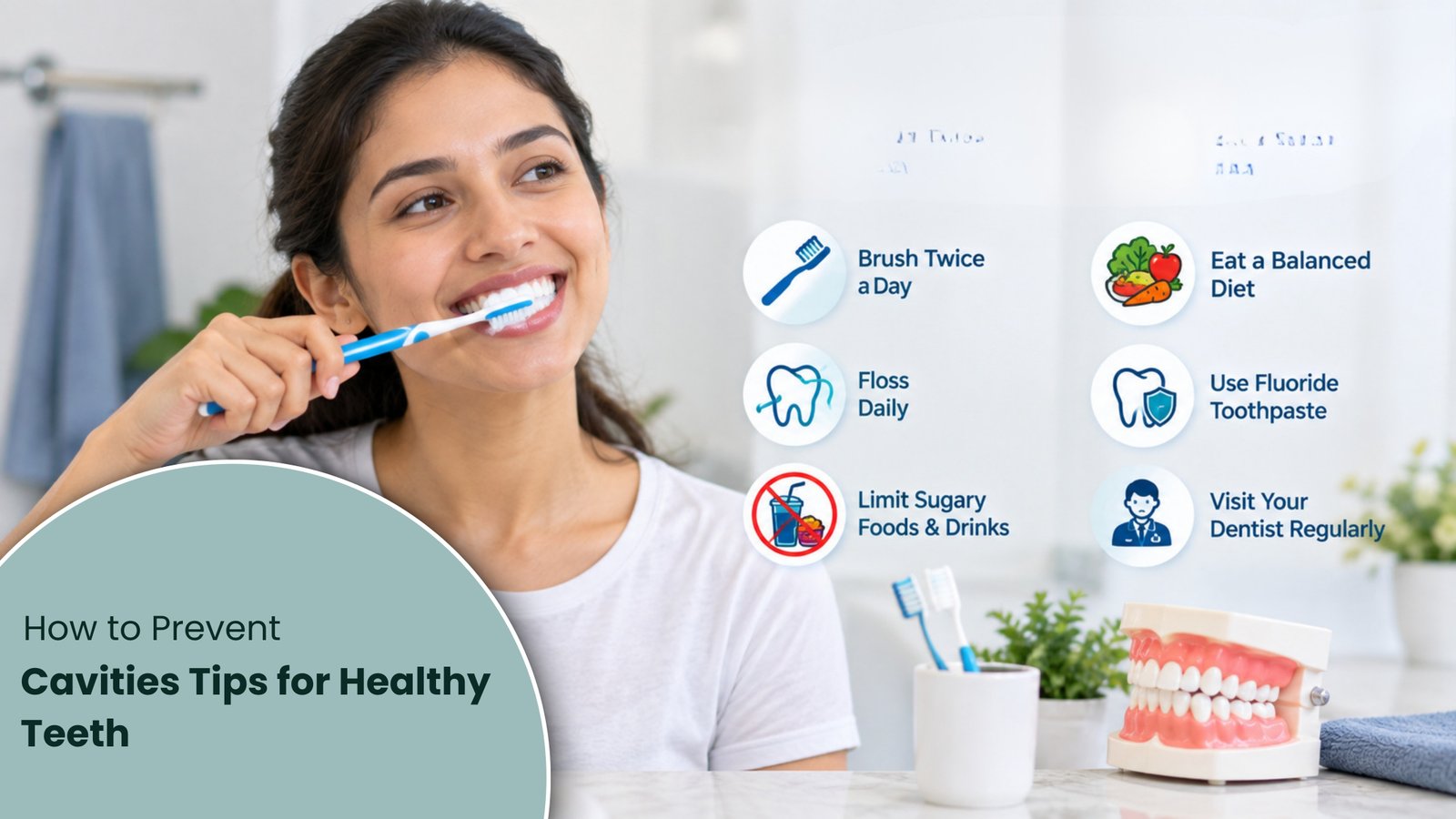
Why Do Cavities Happen?
Bacteria in dental plaque feed on sugars from food and drinks, and that produces acid. Over time, that acid wears down enamel and can eventually punch a hole right through the tooth. Eating sugar often, not clearing plaque properly, and not getting enough fluoride all of it raises the risk.
Here's the tricky part, early decay often doesn't hurt at all. Wait for pain, and the cavity's usually already gotten worse. Regular prevention and dental check-ups catch things earlier, before pain even becomes part of the picture.
1. Brush Your Teeth Twice a Day
Simplest thing you can do, honestly. Fluoride toothpaste, about two minutes each time, twice a day. The ADA backs this exact recommendation for cavity prevention.
Don't scrub hard, though. Gentle, circular motions, and make sure you're actually covering:
- The front and back of your teeth
- Chewing surfaces
- Along the gumline
- The hard-to-reach spots at the back
Doing it consistently, day after day, beats brushing occasionally for ages at a time.
2. Clean Between Your Teeth Every Day
Your toothbrush just can't reach the spaces between teeth. That's where food and plaque build up quietly, and that's exactly where a lot of cavities start.
Floss once a day, or use whatever interdental method your dentist has suggested. Braces, bridges, or teeth packed close together, ask your dentist what actually works best for your mouth.
3. Cut Down on Frequent Sugary Snacks
No need to swear off sweets entirely. What matters more is how often you're eating them.
Sip a sweetened drink all day, snack on sugary things constantly, and you're basically giving cavity-causing bacteria endless opportunities to produce acid. The WHO flags free sugar intake as one of the biggest risk factors for tooth decay.
A few easy swaps:
- Water instead of sugary drinks
- Sweets as an occasional thing, not a daily habit
- No constant snacking between meals
- Check labels for hidden added sugars
- Reach for nutritious snacks when you can
Small shifts, but they add up to a routine that's a lot friendlier to your teeth.
4. Give Your Teeth Enough Fluoride
Fluoride strengthens enamel, plain and simple, and it's a core part of preventing cavities. Fluoride toothpaste is the easiest way most people get regular exposure to it.
If your risk is higher for whatever reason, your dentist might suggest something extra, tailored to your specific oral health situation.
5. Get Regular Dental Check-Ups
At-home care only goes so far, it doesn't replace a dentist actually looking inside your mouth. There's stuff you'll never spot yourself, an early cavity forming, plaque creeping up along the gumline, the start of gum disease, but your dentist will.
How often you need to go depends on your own risk. Someone who's prone to cavities probably needs more frequent visits than someone who rarely gets them.
Your dental care should really be built around your teeth, your habits, your history, not a generic schedule handed to everyone the same way.
6. Do Not Ignore Tooth Sensitivity or Pain
Sensitivity to cold, heat, or sweets, a visible spot on a tooth, food constantly getting stuck, a toothache, none of this should just get brushed off.
These can point to a few different things, decay, worn enamel, gum issues. A proper dental exam is what actually tells you which one you're dealing with.
Notice something's changed with your teeth? Seeing a dentist in Ahmedabad early on can stop a small problem from turning into a bigger one.
When Should You Visit a Dentist?
Time to book a visit if any of this sounds familiar:
- A toothache or sensitivity that won't quit
- A visible hole or dark spot on a tooth
- Pain while eating
- Food that keeps getting stuck between teeth
- Gums that are swollen or bleeding
- Bad breath that regular cleaning isn't fixing
If you're hunting for a dentist in Ahmedabad , look for one who actually listens to what's bothering you specifically and walks you through your options, instead of rushing you out the door.
Take the First Step Towards Healthier Teeth
None of this requires complicated changes. Brush twice a day, clean between your teeth, cut back on frequent sugary snacks, drink more water, and keep up with regular checkups.
For guidance built around you, contact Virtues Dentaire at 9601612384 and talk through your oral health concerns with the team. A proper assessment can help you understand your own cavity risk and figure out the right preventive care for you.
Frequently Asked Questions
It helps a lot, clears out plaque and gives your teeth regular fluoride exposure, both of which bring down your risk. It's not a total guarantee on its own, but it's one of the most effective habits you can keep.
WHO suggests keeping free sugars under 10% of your daily energy intake, and going below 5% brings even more benefit.
No guarantee exists that says cavities will never happen. But good hygiene, fluoride, a tooth-friendly diet, and regular checkups cut the risk significantly.
If you're noticing pain, sensitivity, visible changes, or food getting stuck repeatedly. Catching it early helps figure out if treatment's actually needed.