Many adults go for ceramic braces, lingual braces, or clear aligners because they’re discreet. Metal braces work well too. What suits you depends on your bite, your alignment needs, and your budget.
Types of Dental Braces: Which Option Is Right for You?
Maybe you cover your mouth when you laugh. Maybe food keeps getting stuck between teeth that overlap, or your top and bottom teeth don’t quite meet. Crooked teeth and a misaligned bite affect more than looks, because they also make cleaning harder. The good news is that there are several ways to fix them. If you’re looking into Dental Braces treatment in Ahmedabad, knowing how the main types differ will help you pick one that fits your teeth, your routine, and your budget.
Why Do You Require Dental Braces?
One of the ways that braces operate is by gradually and gently moving teeth into more desirable positions. An orthodontist might suggest them for crowding, gaps, an overbite, an underbite, or teeth that don’t meet properly when you bite.
Straightening them makes chewing more comfortable and cleaning easier. And the decision shouldn’t rest on how your teeth look alone, since the complexity of your case matters most.
6 Types of Dental Braces You Can Choose From
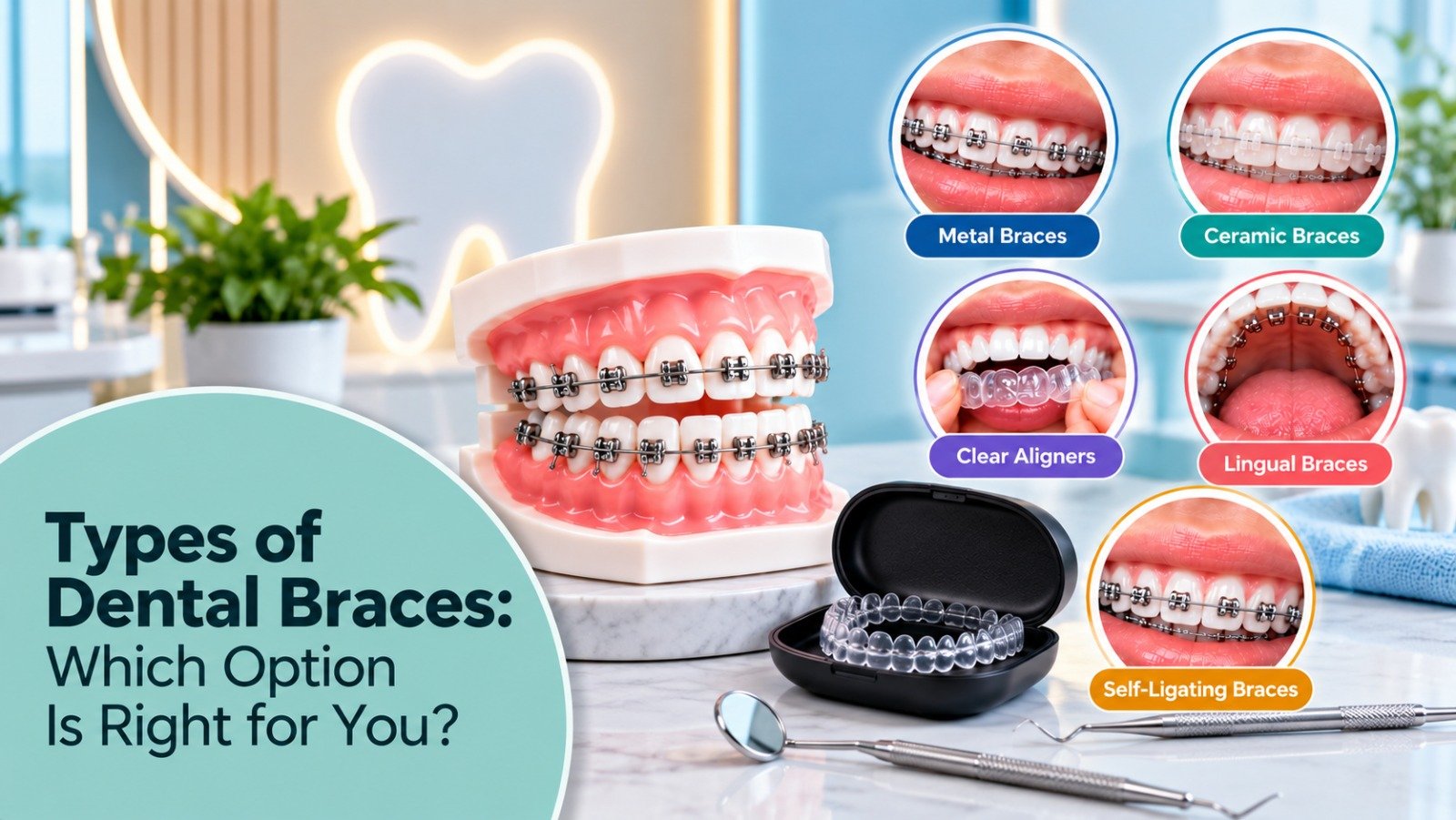
Each one comes with its own trade-offs, so here’s how they compare.
1. Traditional Metal Braces
This is the traditional type of bracket, which is made of steel and is attached to the teeth. It is connected to the teeth by a wire, which gradually moves everything into place. They suit children, teenagers, and adults, from mild problems to complicated ones.
They work for a wide range of cases, they’re sturdy, and they usually cost less than the less visible options. On the downside, they’re easy to spot, and your mouth will feel sore for a day or two after adjustments.
2. Ceramic Braces
These work like metal braces, but the brackets are clear or tooth-coloured, so they blend in better. They’re a fair choice if you want a fixed treatment that doesn’t show as much.
The catch is that ceramic brackets can be more fragile, and some parts may stain if you don’t look after them.
3. Lingual Braces
Here the brackets sit on the back of the teeth, facing your tongue, so nobody sees them when you smile. That’s the main appeal. They suit certain alignment problems.
Expect an adjustment period, though. Your speech may sound slightly different at first, your tongue can feel irritated, and the treatment needs an orthodontist with specific training.
4. Clear Aligners
Instead of brackets and wire, you get a series of see-through plastic trays, each one nudging your teeth a little further. You take them out to eat, brush, and floss, and they’re close to invisible when worn.
The trade-off is discipline. They need to stay in for about 20 to 22 hours a day, or whatever your orthodontist says. Very complex cases may not be suitable for aligners.
5. Self-Ligating Braces
These have small built-in clips that hold the wire, so there are no elastic ties. Some people find that adjustment visits are shorter. Whether the system suits you is something your orthodontist decides based on your teeth.
Don’t assume they’re faster or better. Results depend on your individual treatment plan, not on the bracket type.
6. Metal Braces With Coloured Bands
Metal brackets, but with coloured elastic bands that you can switch at each visit. Younger patients tend to enjoy picking the shades, and the treatment is effective for many alignment problems, often at a fairly modest cost.
They’re easy to see, and food gets trapped around the brackets if you don’t clean carefully.
Which Type of Dental Braces Is Right for You?
It comes down to your teeth, your goals, your budget, and your daily routine. This rough guide shows where to start the conversation.
| What matters most | Worth discussing |
|---|---|
| Keeping costs down | Traditional metal braces |
| Less noticeable brackets | Ceramic braces |
| Fixed braces nobody can see | Lingual braces |
| Removable and discreet | Clear aligners |
| A particular bracket system | Self-ligating braces |
| Choosing your own colours | Metal braces with coloured bands |
Your orthodontist will look at your teeth, your bite, and your jaw before suggesting anything. Some cases need X-rays, photographs, or digital scans first, so the plan is accurate.
How Can You Get Better Results From Braces?
Whatever type you choose, daily habits shape how treatment goes.
Brush carefully after meals, and clean around the brackets or the aligners. If you have fixed braces, stay away from hard and sticky foods. If you’re using aligners, wear them for the hours you’ve been told. Keep your appointments, and call your orthodontist if a bracket snaps or an aligner stops fitting.
Wear your retainer after treatment ends. Teeth drift back if you skip it.
How long all this takes varies, from several months to a few years, depending on the case. Following an examination, your orthodontist will be able to provide a more accurate estimate.
Start Your Journey Towards a Healthier, Straighter Smile
Picking braces needn’t be stressful. Once you know the options and have talked through your worries with an orthodontic professional, the choice gets much easier.
At Virtues Dentaire, you can ask about your orthodontic concerns and go through suitable ways to improve your smile. Call 9601612384 to enquire about an appointment and the treatment options available.
In addition, if you are seriously considering getting dental braces in Ahmedabad, you should first receive a personal evaluation. Choosing braces only by looks or price is a common mistake.
Frequently Asked Questions
It varies with the type of braces, how complex your case is, how long treatment lasts, and the clinic. Ask for an estimate that spells out what the fee covers.
Not always. Aligners are discreet and removable. Metal braces handle a broader range of alignment problems. Your orthodontist will say which one fits your case.
Anywhere from several months to a few years. It depends on how far the teeth have to move, any bite problems, how complex the case is, and how closely you follow instructions.
There’s usually some soreness or pressure after fitting or an adjustment, and it normally fades within a few days. If pain is severe or doesn’t go away, tell your orthodontist.