A screw-retained crown can be taken out again later if needed, whereas a cement-retained crown gets glued on, giving it a more seamless, natural finish.
What Are The Types of Dental Implants?
Missing a tooth and not sure which implant option actually suits you?
Whether it is one tooth, a few, or your entire smile, choosing the right type of implant makes a real difference to comfort and how natural the result feels. That is exactly why so many people look into Dental Implants in Ahmedabad before deciding on treatment.
In this blog, we break down the main types of dental implants and their most important subtypes, so you actually understand what happens in each one.
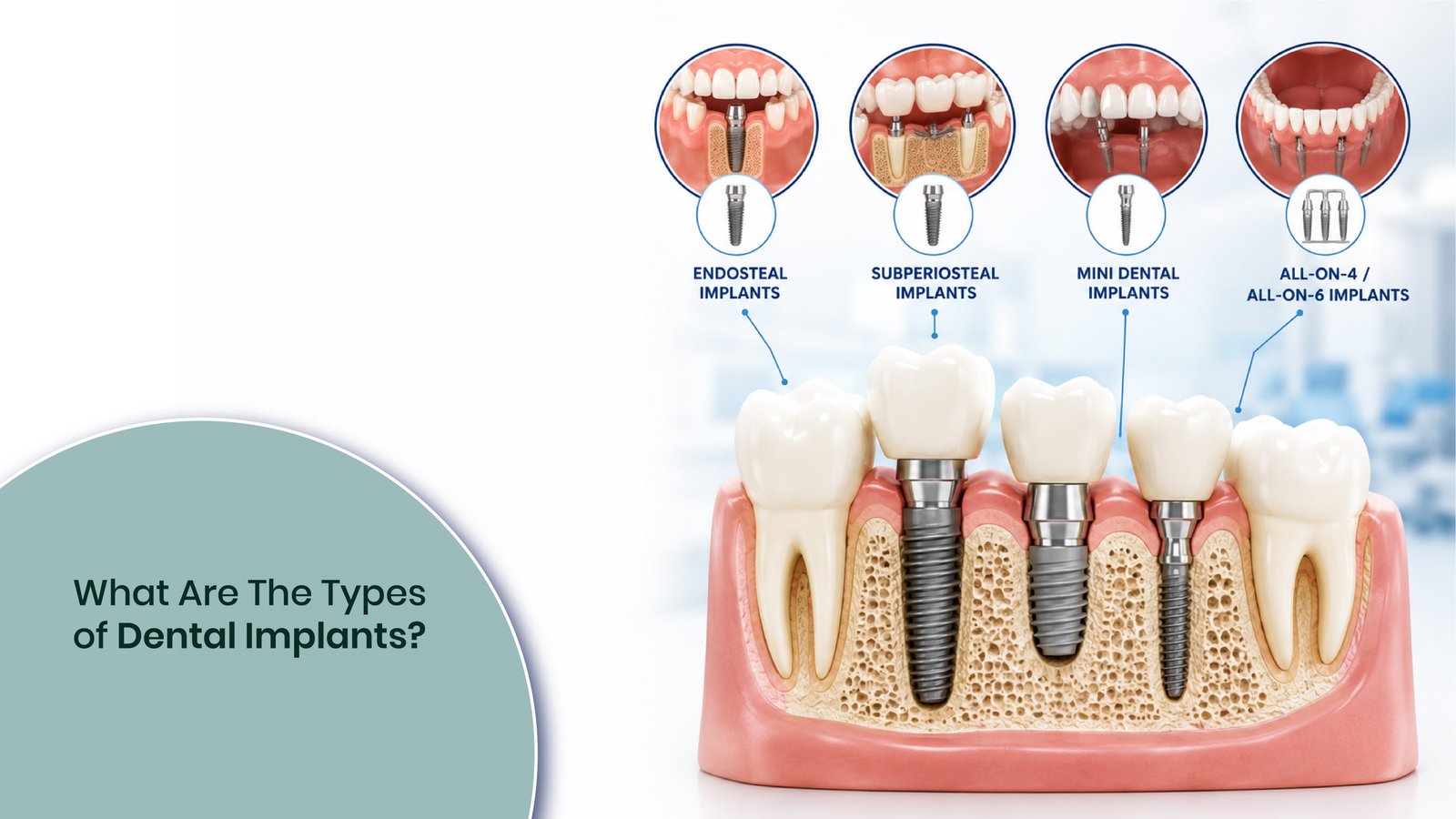
Single Tooth Implant
Used when only one tooth is missing. The implant post goes into the jawbone, heals, then a crown is fixed on top to match your natural teeth, leaving the teeth on either side untouched.
Screw-Retained Implant
The crown here is not permanently stuck on. A tiny screw holds it in place instead of cement.
- - The dentist can unscrew it later if repair or cleaning underneath is ever needed.
- - No cement gets left behind near the gum, so irritation is less likely.
- - Back teeth are where this is used most, since a small screw mark barely matters there.
Cement-Retained Implant
Dental cement is used to fix the crown onto the implant, the same method used for a regular crown on a natural tooth.
- - Gives a smooth, natural look with no visible screw hole.
- - Preferred choice for front teeth, where appearance matters most.
- - Removing the crown later for repair takes more effort, since it is cemented in place.
Multiple Teeth Implant
Used when a few teeth are missing, together or scattered. A smaller number of implants support all the replacement teeth at once, restoring both function and a natural-looking smile.
Fixed Implant Bridge
Two implants go in at either end of the gap, with a bridge of replacement teeth fixed between them, covering three or more missing teeth using just two implants.
- - Costs less than placing a separate implant per tooth.
- - Chews and functions almost like natural teeth.
- - Needs healthy bone at both ends of the gap to anchor properly.
Individual Side-by-Side Implants
This one skips the connecting bridge entirely. Each missing tooth gets a separate implant of its own, functioning independently just as a natural tooth would.
- - Each implant stands on its own, so a problem with one does not affect the others.
- - Cleaning gets easier with the natural space left between implants.
- - The higher implant count here means the cost runs more than a bridge would.
Full Mouth Implant
Best suited for people who have lost most or all of their teeth in one or both jaws. A set of implants takes on the whole arch at once, offering a long-term fix that is either fixed in place or removable for cleaning.
Fixed Full Mouth Implants
These are permanently attached in the mouth and are not removed for cleaning, providing the closest feeling to having your natural teeth back.
All-on-4
Exactly four implants are placed in the jaw, with the back two angled carefully, and a full arch of teeth is fixed onto them.
- - Fewer implants mean the procedure tends to move faster and stay simpler.
- - Angled placement makes use of stronger bone areas, which often skips the need for bone grafting.
All-on-6
The concept is the same as All-on-4, just with six implants instead of four for added support.
- - Spreads out the chewing force across more implants, which can mean better long-term stability.
- - Usually recommended for patients who have slightly better bone density and want extra strength for daily chewing.
Removable Full Mouth Implant
Unlike fixed options, these can be removed by the patient for cleaning, offering greater flexibility while remaining far more stable than regular dentures.
Snap-In Overdenture
A denture with small attachments underneath clicks or snaps onto a few implants placed in the jaw.
- - A denture with small attachments underneath clicks or snaps onto a few implants placed in the jaw.
- - Can be removed daily for easier cleaning.
- - Generally more affordable than fixed full mouth options.
Which Is Right for You?
How many teeth are missing, whether the gaps are close together or spread out, your jawbone health, whether you prefer a fixed or removable result, and your budget all factor into the decision.
A dental check-up with an X-ray or scan helps your dentist figure out which type suits your mouth best. This is the first step for anyone exploring dental implant treatment in Ahmedabad.
Final Thoughts
Understanding what each implant type involves makes the decision much easier, whether it is a single tooth, a bridge for a few missing teeth, or a full mouth restoration. Bone health, budget, and how you want your daily routine to look all factor into that decision.
If missing teeth have been holding you back, Virtues Dentaire can guide you through the right option. Book your consultation today. Contact 96016 12384 to get started.
Frequently Asked Questions
Not always. A fixed implant bridge can replace several missing teeth using just two implants at either end of the gap.
All-on-4 gets the job done faster with four implants, while All-on-6 adds two more for a sturdier bite.
Yes, options like a snap-in overdenture attach to implants but can still be taken out daily for cleaning.
Fixed options generally feel most like natural teeth. Removable options tend to cost less and are simpler to clean, so it really comes down to what matters more to you.